




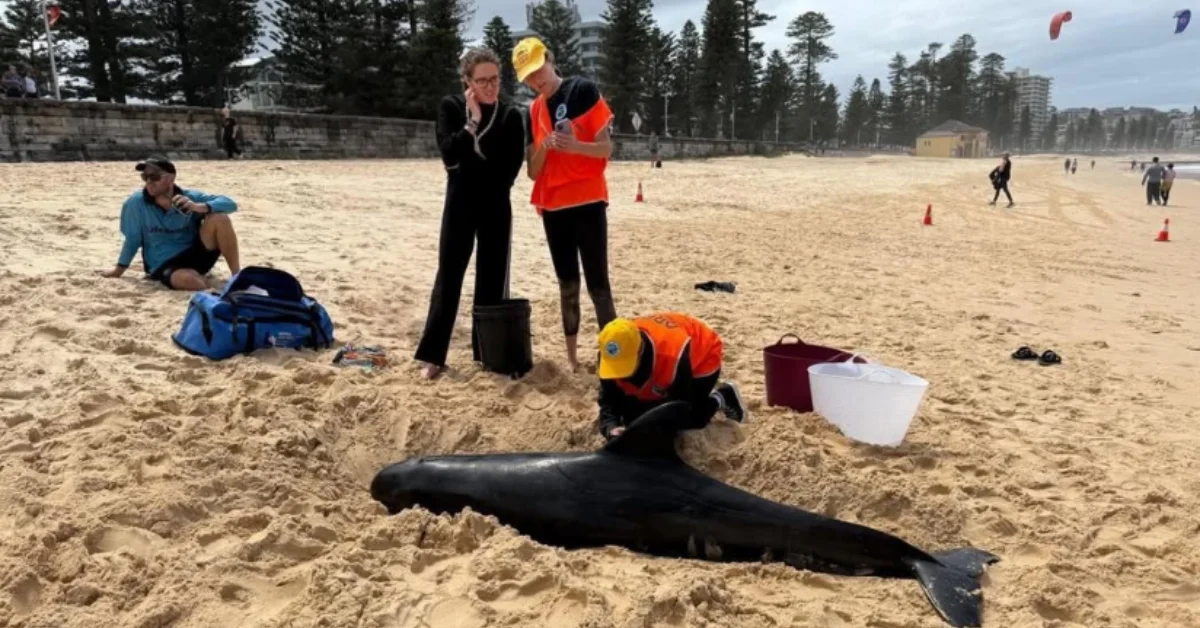
A rare pygmy killer whale became stranded alive at Manly Beach, drawing an urgent response from wildlife rescuers and the local community. Sadly, the animal did not survive.
Emergency Response At Manly Beach
The stranding occurred on Sunday 18 January 2026, when reports of a live marine animal on the sand were received at about 1 p.m. (AEDT). Members of the public and the Manly Surf Life Saving Club contacted the ORRCA rescue hotline after noticing the animal on the shoreline.
Specially trained ORRCA rescue coordinators gathered information and mobilised a response team. By the time rescuers arrived, several re-float attempts had already been made by bystanders. Despite these efforts, the animal died.
Identification Confirmed After Initial Assessment
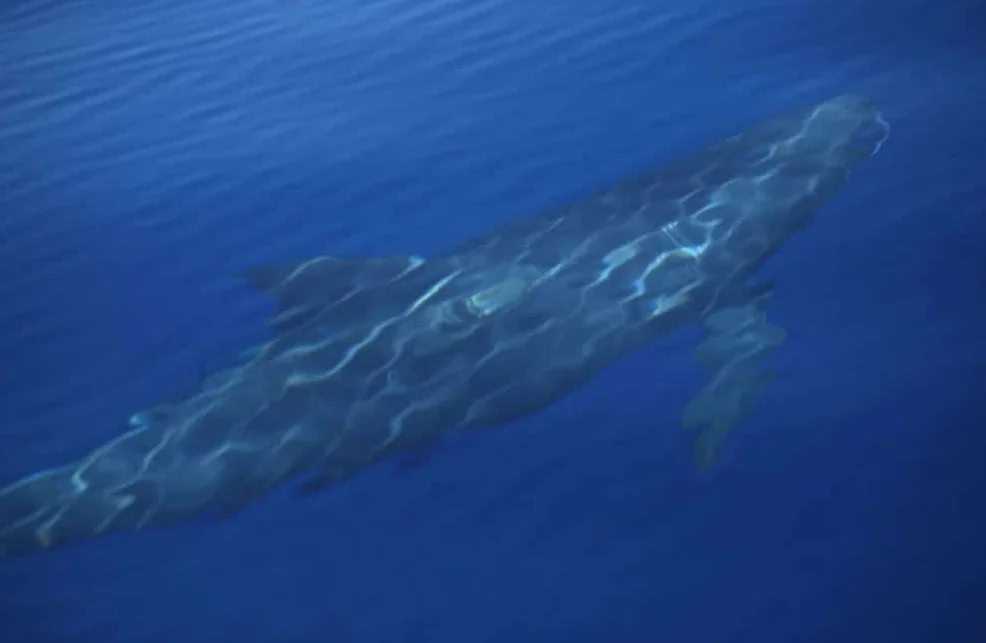
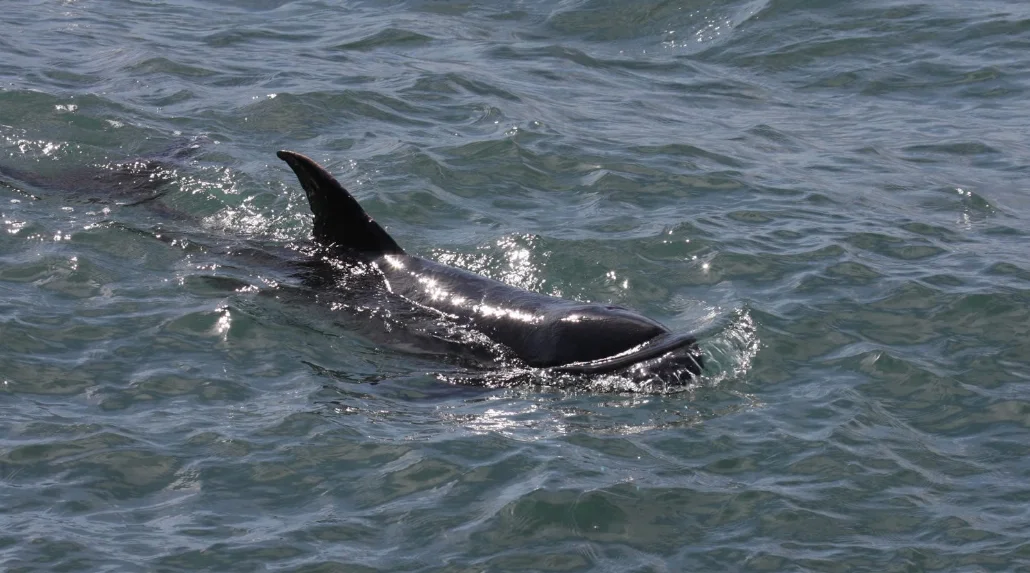
The animal was initially described as a dolphin and later identified as a melon-headed whale. Further assessment confirmed it was a pygmy killer whale, a small oceanic toothed whale rarely seen close to shore.
Pygmy killer whales typically grow to just over two metres in length and are most commonly found in deep tropical and subtropical waters. Sightings near beaches are uncommon, and limited information is available about their behaviour due to their offshore habitat and infrequent surface activity.
Post-Incident Examination Planned
Following the incident, the animal was transported by NSW National Parks & Wildlife Service to Taronga Wildlife Hospital. A necropsy will be carried out in the coming days and weeks to determine the cause of the stranding and death.
The examination is expected to help improve understanding of this individual animal and contribute to broader knowledge about the species and marine environment.
Community Response And Public Guidance
ORRCA acknowledged the efforts of the Manly community, noting the strong public concern shown during the incident. Wildlife responders reiterated that while public care is valued, stranded marine mammals require professional assessment, and returning an animal to the water is not always appropriate.
Members of the public are advised to avoid attempting rescues without expert guidance and to contact trained responders immediately if a whale, dolphin or seal is found in distress.
Published 19-Jan-2026