




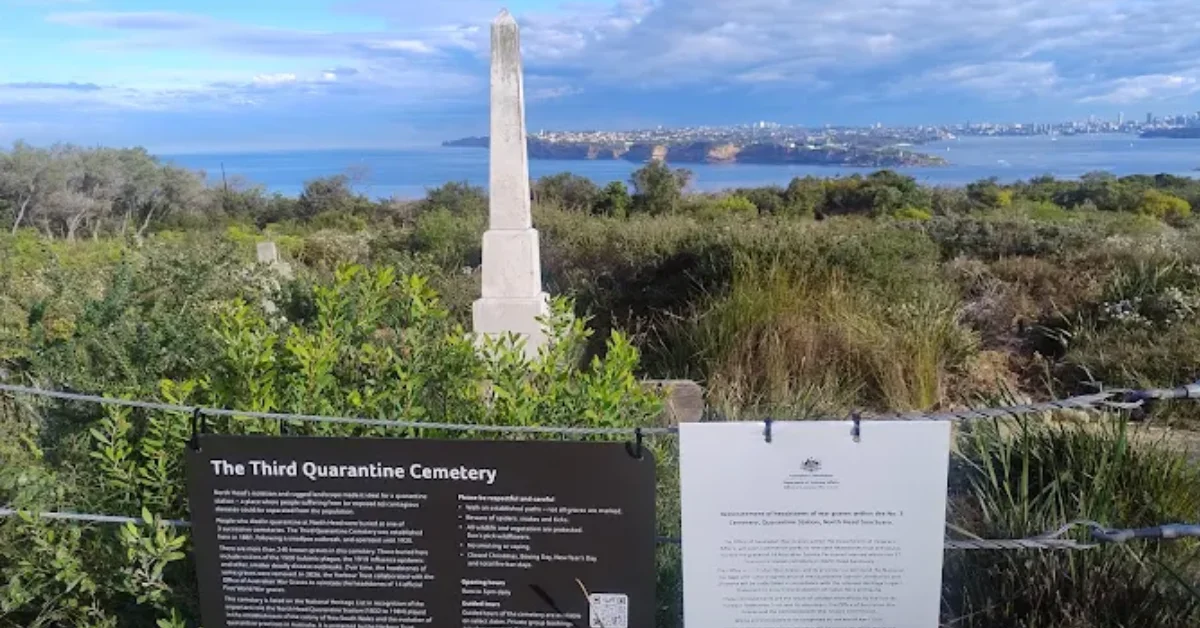
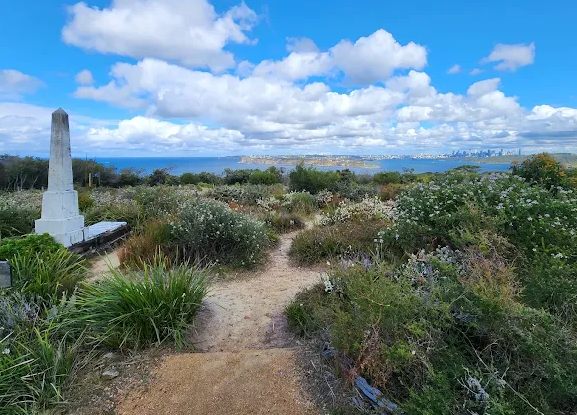
Tucked within the historic grounds of North Head Sanctuary in Manly, a long-overlooked chapter of Australia’s First World War history has been brought back into public view, with 14 soldiers and one sailor now officially commemorated through official Commonwealth war grave headstones.
Read: North Head Volunteers Rebuild Colonial-Era Gun Carriage in Manly
The newly recognised graves are located in the Third Quarantine Cemetery, where military personnel who died during the influenza pandemic of 1918 to 1920 were buried after arriving at the nearby North Head Quarantine Station. Their recognition follows extensive historical research undertaken by the Sydney Harbour Federation Trust and its volunteers, with the Office of Australian War Graves later confirming the veterans met the eligibility criteria for official commemoration.
The project revealed that more veterans were buried at the heritage-listed cemetery than previously understood. Many of the servicemen had embarked as reinforcements for the First World War aboard a military convoy that departed Australia on 2 November 1918. Before they reached Europe, the Armistice ended the conflict on 11 November and the convoy was ordered home.
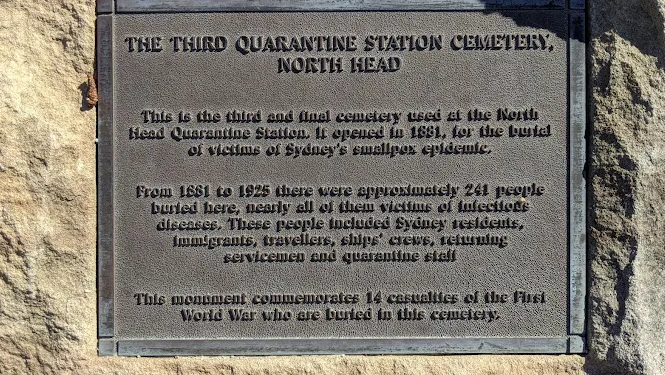
After returning to Sydney, the soldiers entered quarantine at North Head, where many contracted the Spanish flu that swept across the world between 1918 and 1920. Most of the 14 soldiers died within two weeks of arriving back in Sydney, with three privates dying on the same day, 25 November 1918.
Among those commemorated is Sapper James Shaw, who had been discharged from the Australian Army in 1918 before taking up work at the North Head Quarantine Station. He later contracted influenza and died in April 1919.
Because of fears that the disease could spread, those who died were buried quickly. Their graves were originally marked with simple wooden stakes, but these deteriorated over time, leaving many burial sites difficult to identify within the now overgrown cemetery.
Research by the Harbour Trust’s heritage team helped identify the veterans and locate many of their burial sites, allowing the Office of Australian War Graves to confirm they met the eligibility criteria for Commonwealth war dead. As a result, the burial sites have been marked with hand-cut white marble headstones made from marble quarried at Chillagoe in northern Queensland.
Where an exact burial location could not be confirmed, the headstones have been inscribed with the words “Buried near this spot” to acknowledge the approximate resting place while ensuring the individuals are permanently commemorated.
The new memorials join the existing official war graves of Private Hector Hicks, Nurse Annie Egan and Nurse Elizabeth McGregor, whose deaths had already been recognised as being connected with their wartime service.
Sydney Harbour Federation Trust Executive Director Janet Carding said recognising the veterans, including Sapper James Shaw, was an important way of honouring their service. She said the new headstones would help connect visitors and the wider community with North Head’s military history.
Office of Australian War Graves Director, retired Major General Wade Stothart, said the organisation’s role is to commemorate Australia’s war dead in perpetuity. He said reinstating the headstones ensures the service and sacrifice of the veterans will continue to be recognised.
The Third Quarantine Cemetery is open to the public throughout the year. Harbour Trust volunteers also conduct monthly tours of the cemetery.
Read: North Manly Police Pursuit Ends In St Ives Crash With Driver Charged
The servicemen newly commemorated are Private A. E. Brown, Private J. M. Cahill, Private P. Chirvin, Petty Officer A. Davies, Private P. G. Edwards, Private R. Fairley, Lance Corporal W. H. MacCroanan, Private H. McKay, Private F. T. Morgan, Private J. H. Petherick, Private G. W. Ridley, Sapper James Shaw, Staff Sergeant J. Stock and Private T. J. Treacy.
Published 30-June-2026