




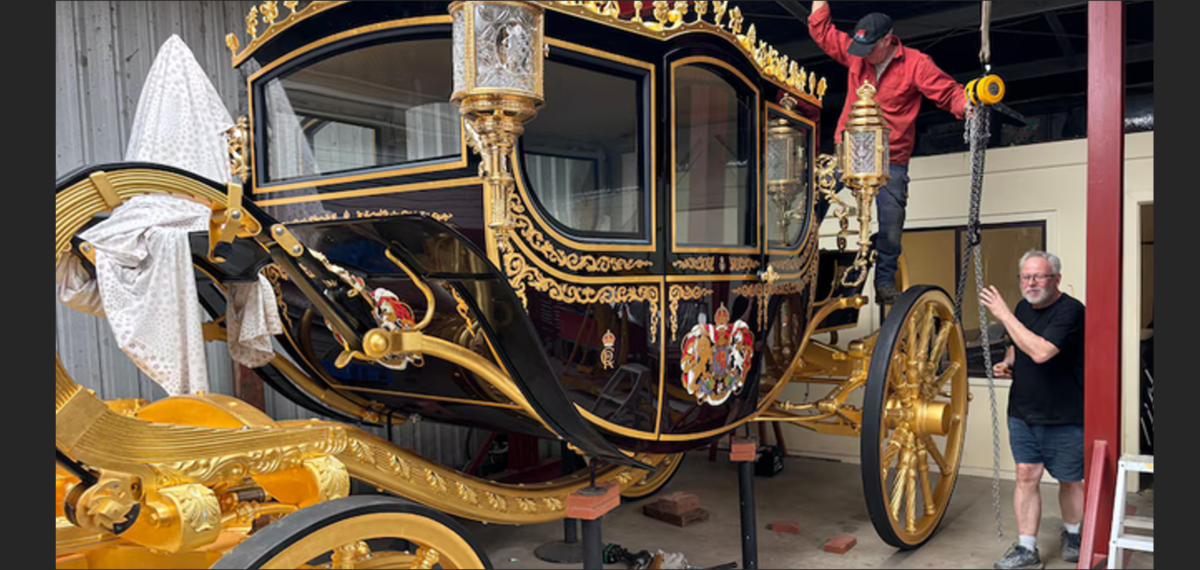
It weighs more than three tonnes, glitters with hand-laid gold and contains pieces of Australian and British history. Yet one of the most remarkable things about the Commonwealth Royal Coach is where — and how — it has been built.
For years, inside Jim Frecklington’s workshop at Manly’s North Head, painters, metalworkers, leatherworkers, engineers and other specialists have been turning his idea for a ceremonial carriage intended for King Charles III into a working vehicle capable of being drawn by six horses.
Frecklington will not see the last of their work completed. He died in Manly on Friday, 11 September, aged 76, after a lengthy battle with cancer.
The carriage was tantalisingly close. His friend and vehicle body painter Owen Webb said after Frecklington’s death that he expected it to be about 98 per cent complete once the immediate finishing work was done.
What remains is now in the hands of the people Frecklington gathered around him — the same craftspeople he had already said knew enough about the project to carry on if his health prevented him from finishing it himself.
Read: Royal Coach Maker’s Manly Apartment Sells $400k Above Guide
A Royal Coach Built By Many Hands
Frecklington carried much of the design in his head, but turning it into a three-tonne carriage required skills scattered well beyond the Northern Beaches.
In interviews with ABC during the build, several of those craftspeople described just how specialised their contributions had become.
Webb, from Moss Vale, worked on all three of Frecklington’s royal coaches. Giving the new carriage its deep two-tone finish involved weeks of preparation, primer and topcoat, and at one point the sheer size of the body meant moving it to a Sydney spray booth large enough to take it.
Then there was the decorative work. Sydney fine-art painter Paula Church whose association with Frecklington stretched back decades, hand-painted four coats of arms and worked on the gold leaf. It was painstaking work carried out in stages over a period stretching into years.

In Wollongong, metal spinner Tony Edwards was called on to reproduce specialist exterior light fittings, having previously made fittings for Frecklington’s earlier coaches.
The wheels took the project much further afield.
At Maryborough in Queensland, woodcarver Kevin Banting carved patterns used in their manufacture before the work moved into the foundry and engineering process at Wm Olds & Sons. Adult apprentices Lachlan Hansen and Cameron Stuart helped manufacture aluminium spokes destined to become part of the coach’s gilded wheels.
By the time those wheels reached Manly, they carried the work of people roughly 1,000 kilometres from the workshop where the carriage was coming together.
That was how much of Frecklington’s project worked: not one man somehow practising every old trade himself, but one coachmaker knowing which skills he needed and where to find them.
Putting His Own Home Behind the Project
Frecklington also put something more personal into the Commonwealth Royal Coach: his own money.
ABC reported in 2024, while he was alive and the coach was under construction, that Frecklington had mortgaged his home to finance this particular project.
There was some precedent for the unusual approach.
His earlier Diamond Jubilee State Coach was not originally a conventional Royal Household commission either. Contemporary British reporting records that Frecklington initiated the project himself. The Australian Government contributed to its cost, while Frecklington was understood to have met the balance.
Once completed, however, the coach was acquired by the Royal Collection Trust, largely using money from a private donation, and entered royal service in 2014.
Nine years later, it was the carriage that took King Charles III and Queen Camilla from Buckingham Palace to Westminster Abbey for their Coronation.
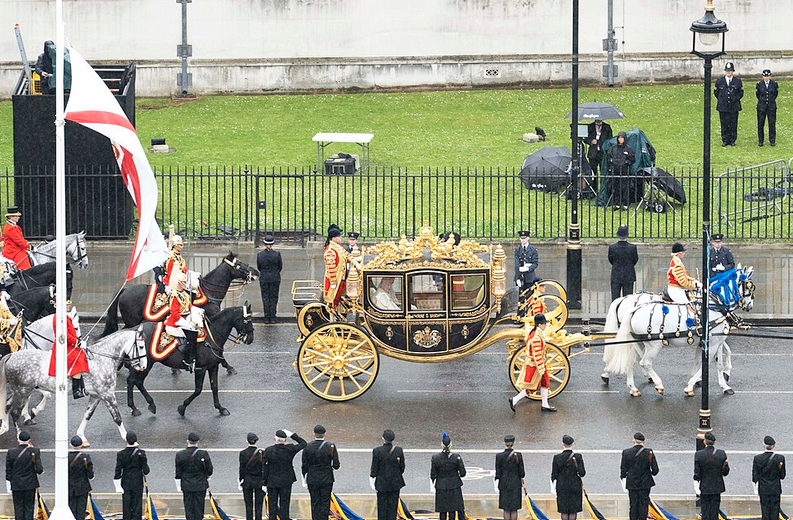
Frecklington had hoped his newest coach would also be ready for the Coronation in May 2023. Cancer treatment slowed the work and the deadline passed.
The Commonwealth Royal Coach remains a privately initiated project intended for King Charles III. We have found no public Royal Household announcement establishing that it was formally commissioned by the King or Buckingham Palace.
Frecklington, in other words, was again prepared to build first.
JIM FRECKLINGTON: THE MAN BEHIND THE COACH
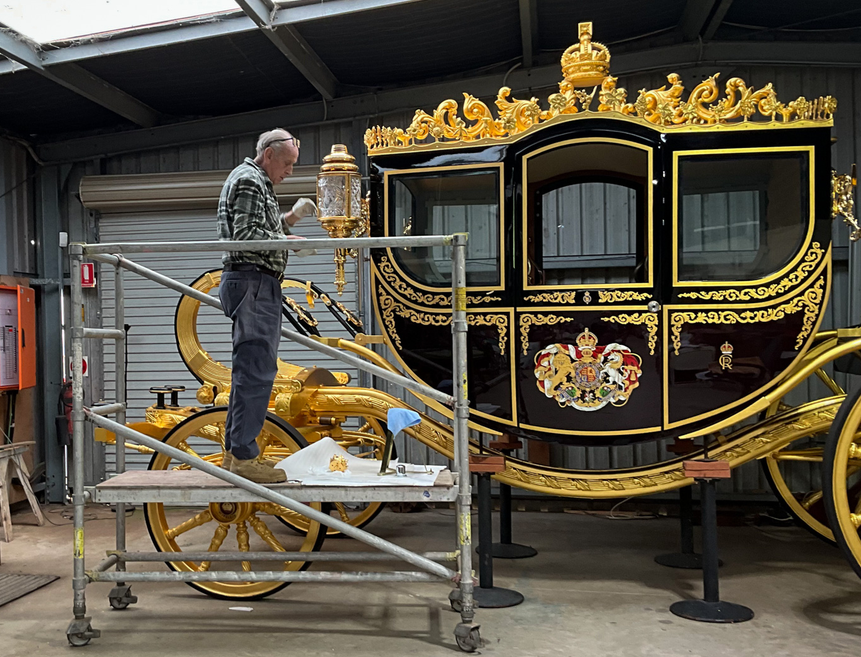
William James “Jim” Frecklington MVO OAM was 76 when he died in Manly on 11 September 2026, following a lengthy battle with cancer.
His connection with royal carriages stretched back decades. As a young Australian in Britain, Frecklington worked at Windsor Castle and later at the Royal Mews, where he cared for ceremonial horses and learned about the carriages they pulled.
Back in Australia, he built the Australian State Coach, presented to Queen Elizabeth II as Australia’s Bicentennial gift in 1988, and later created the Diamond Jubilee State Coach. He was awarded the Medal of the Order of Australia (OAM) for service to the community through the design and construction of horse-drawn vehicles.
The Diamond Jubilee State Coach entered royal service in 2014 and carried King Charles III and Queen Camilla to Westminster Abbey for their Coronation in 2023.
His final project was the Commonwealth Royal Coach, intended for King Charles III. Frecklington knew illness might prevent him from completing it and said in 2024 that the craftspeople working alongside him had the knowledge to carry on if he could not. That is now what they are doing.
Opera House Handles, Harbour Bridge Steel
The Commonwealth Royal Coach may look as though it belongs to another century, but Frecklington was not building an antique.
Electric windows and climate control sit inside a traditional ceremonial body. Around that modern engineering he assembled something approaching a travelling collection of history.
Timber from Westminster Abbey was incorporated into the coach. Its decoration includes the national flowers of the Commonwealth’s 56 member countries, while portraits inside trace more than a thousand years of monarchy.
Australia is physically built into it too.
Steel from the Sydney Harbour Bridge was incorporated into the steps and undercarriage. Saddler Sonja Giesekam told Equestrian Life that she was given handles that had once been on doors at the Sydney Opera House Concert Hall and asked to transform them into handholds behind the cabin.
She moulded them, covered them and stitched their leather by hand. Giesekam and Frecklington then sourced leather from third-generation Sydney supplier NSW Leather to complement the silk used inside.
The result is a curious meeting of eras: old-fashioned hand stitching around pieces of the Opera House, fitted to a horse-drawn carriage with electric windows.
Frecklington had done something similar before. His Diamond Jubilee State Coach combined hand-applied gold leaf and traditional carriage work with an aluminium body, hydraulic stabilisers and electric windows. The Royal Family says almost all of its craftsmanship was sourced in Australia.
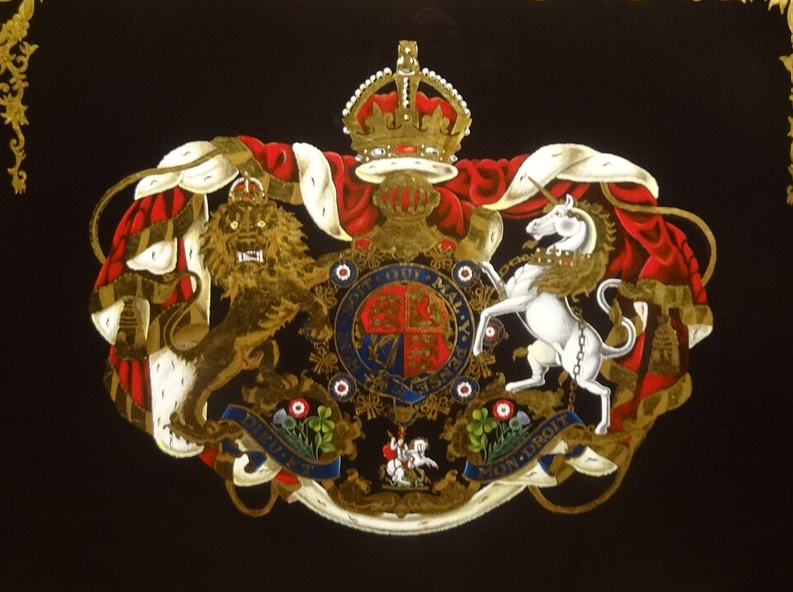
The Commonwealth coach has again drawn those specialist skills towards Manly.
Read: Manly’s Historic Kangaroo Returns With Head And Ears Restored
In December 2025, the nearly finished carriage was blessed inside Frecklington’s workshop by The Scots College Community Chaplain, Reverend Conrad Nixon. Frecklington, a former Scots student, was there.
By then he had already considered what would happen if his health stopped him completing the job. In a 2024 interview, he spoke of the “wonderful men and women” involved and said they knew enough to carry on.
That is what they must now do.
Webb and the remaining team are completing the work Frecklington left behind. Once the coach is finished, the stated plan is for it to be transported to London.
If it makes that journey, the carriage will carry the work of a Moss Vale vehicle painter, a Sydney artist, a Wollongong metal spinner, a Hunter-region leatherworker, a Queensland woodcarver and engineering apprentices — all brought together by a coachmaker working from North Head.
For something intended for a King in Britain, an extraordinary amount of it was made a very long way from Buckingham Palace.
Published 16-September-2026





.jpg)
