




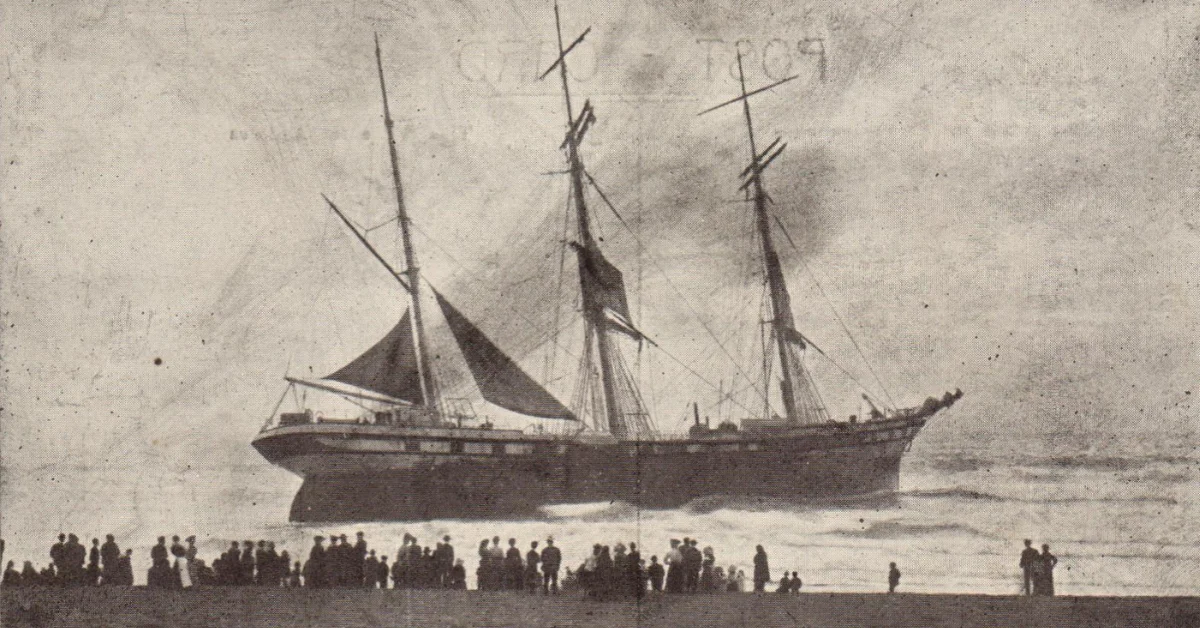
Did you know that 120 years ago in May 1906, a 2,311-tonne French sailing ship came grinding onto Manly Beach in the middle of a stormy night, and by the weekend had turned the suburb into the most talked-about destination in Sydney?
Read: 80 Kilometres Later, It All Ends at Manly: The Coastal Ultra Is Back
It sounds like something from a Patrick O’Brian novel, but the grounding of the French barque Vincennes on 24 May 1906 was very real, very dramatic, and in typical Manly fashion, it quickly became a party.
How the Vincennes Ended Up on the Wrong Beach
The Vincennes was no small vessel. Built at Nantes in 1900 and registered to the Societe Anonyme des Longs Courriers Français, the three-masted steel barque stretched nearly 85 metres in length and measured 2,311 tonnes gross. She was 66 days out of Yokohama, carrying only ballast, when her captain, a man named Leviellent, made a catastrophic navigational error off the NSW coast.
It was actually his second close call in two days. The night before the grounding, Leviellent had mistaken The Skillion at Terrigal for Sydney Heads. Only a timely warning from local fishermen saved the ship that time. But on the night of Thursday, 24 May, with heavy rain and driving seas reducing visibility to almost nothing, history repeated itself. According to one crewman, thinking he was off the Heads, Leviellent burned blue lights to signal the pilot boat, waiting for guidance that never came. Another crewman told the press that a red light on the port bow had been mistaken for the harbour entrance. Locals denied any such light existed.
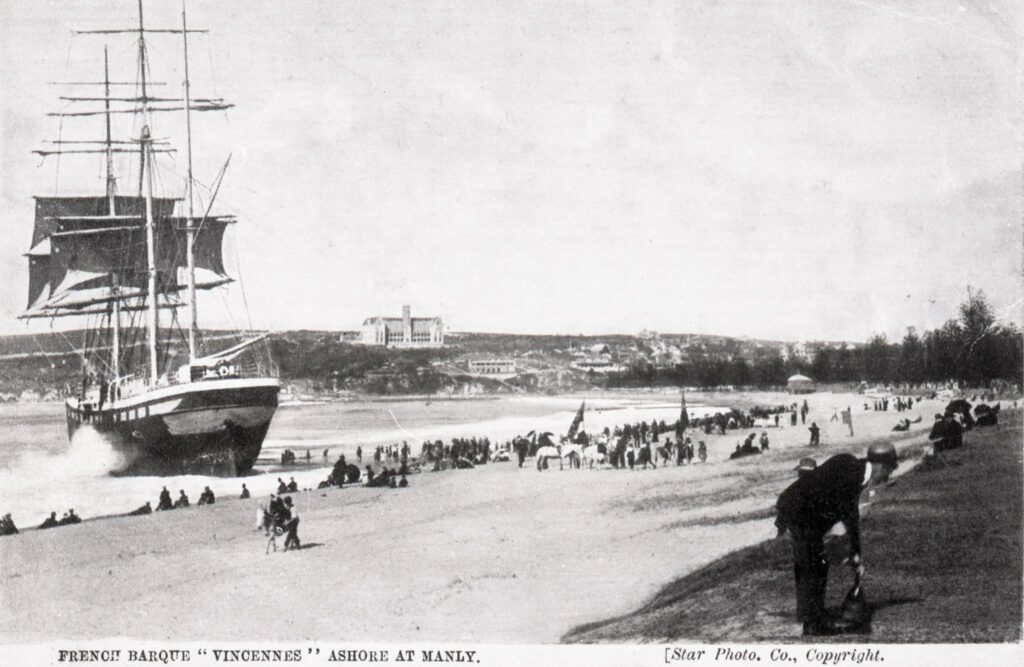
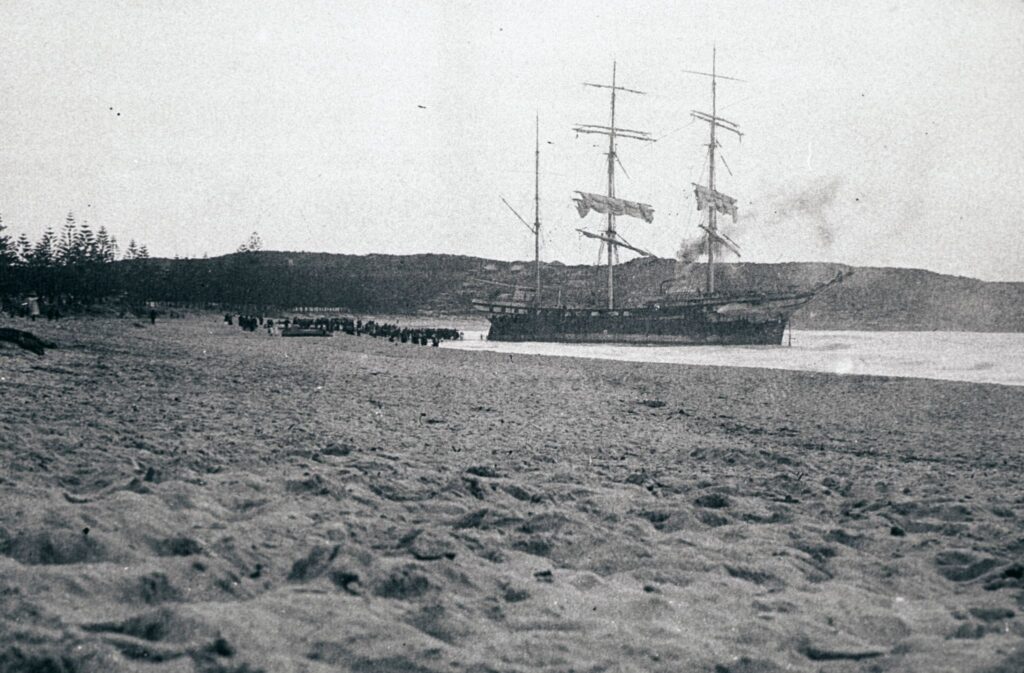
By the time the anchor was dropped and distress flares were fired, it was too late. The Vincennes came ashore stern-first at around 9.30pm, between Pine and Carlton streets, then swung broadside. The pounding surf worked her deeper into the sand with every wave. A few wet and bedraggled sailors made it to shore and, despite the language barrier, managed to convey that all 23 crewmen were safe. The pilot boat had already decided the seas were too rough to attempt a rescue and stayed well clear.
Brass Bands, Postcards, and 23,000 Ferry Passengers
Once it was clear no lives were at risk, Manly did what Manly does best: it put on a show. Members of the local town band had been drinking in a nearby hotel and, rain be damned, they made their way to the beach to serenade the stranded Frenchmen with a damp but enthusiastic rendition of the Marseillaise. They followed it with Home, Sweet Home and Auld Lang Syne, thoughtfully directed at the few Englishmen among the crew.
By morning, word had spread across Sydney and the crowds descended. On both the Saturday and Sunday that followed, the Port Jackson Co-operative Company threw its entire fleet of five ferries plus a hired steamer at the problem, and still could not keep up. More than 23,000 people crossed by ferry on each of those two days. At Circular Quay, police were called to manage crowds who could not get on board. Those who tried the overland route to The Spit found the punt equally overwhelmed, and thousands went home disappointed.
On the beach itself, it was pure carnival. Deck chairs were hired out to sightseers, children had pony rides, and food and drink vendors did a roaring trade. Photographers were among the sharpest operators: they shot the wreck, sprinted back to their darkrooms, printed the images onto postcard backs and were reselling them on the sand within hours. A fete was held in aid of Manly Hospital, with nurses serving afternoon tea among the spectators. Even Henry Lawson came to look. His poem The Stranded Ship was published in the Bulletin on 17 June 1906, his 39th birthday.
Read: Manly Moves Closer to Becoming an Official Entertainment Precinct With Night-Time Trading Trial
Salvage took nine days. Two tugs made repeated attempts to pull the Vincennes free; on one occasion an 89mm steel hawser snapped clean under the strain. Salvors eventually jettisoned most of the 700 tonnes of ballast, dismantled the masts, and laid a seabed anchor off Manly connected to the ship by hawser to stop her being driven further up the beach. At 3am on Saturday, 2 June, three tugs combined with the ship’s own winch finally hauled her clear. By 8am she was anchored in Neutral Bay.
A survey at Mort’s Dock found fractured frames but no serious structural damage. Repairs were completed by early July, and on 30 July 1906 the Vincennes sailed away from Sydney and was never seen off Manly again.
Published 29-May-2026