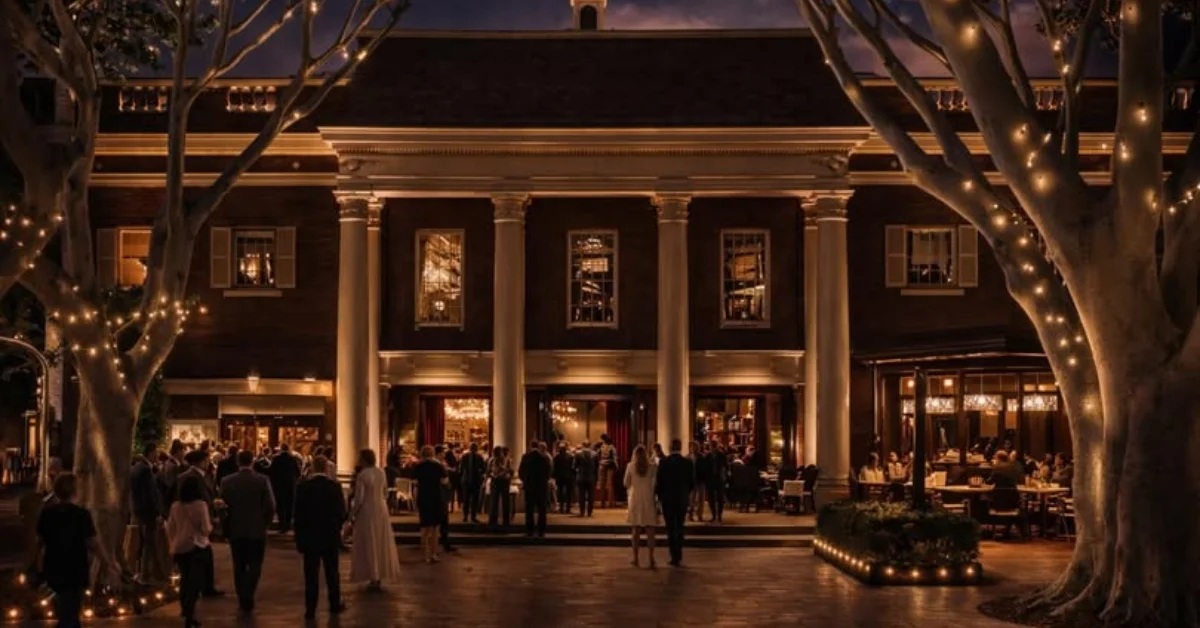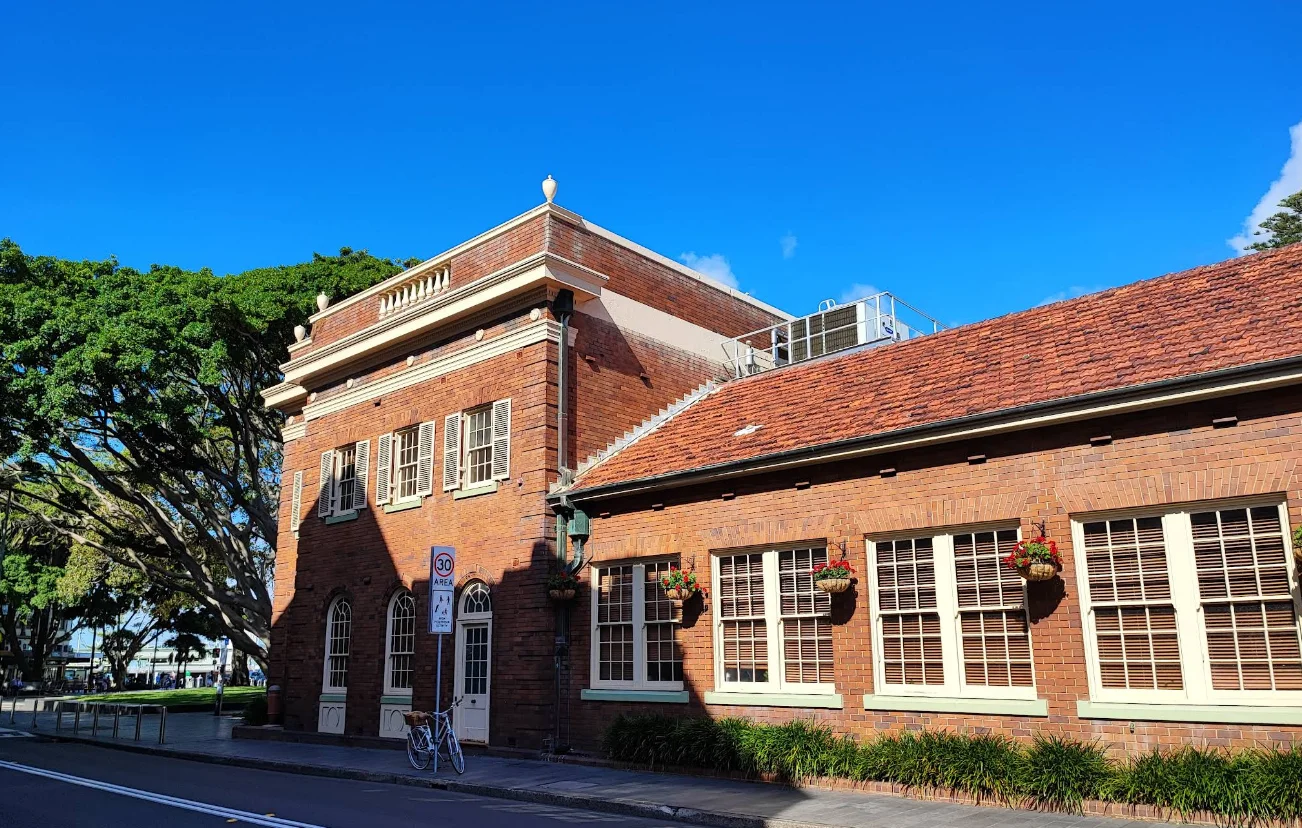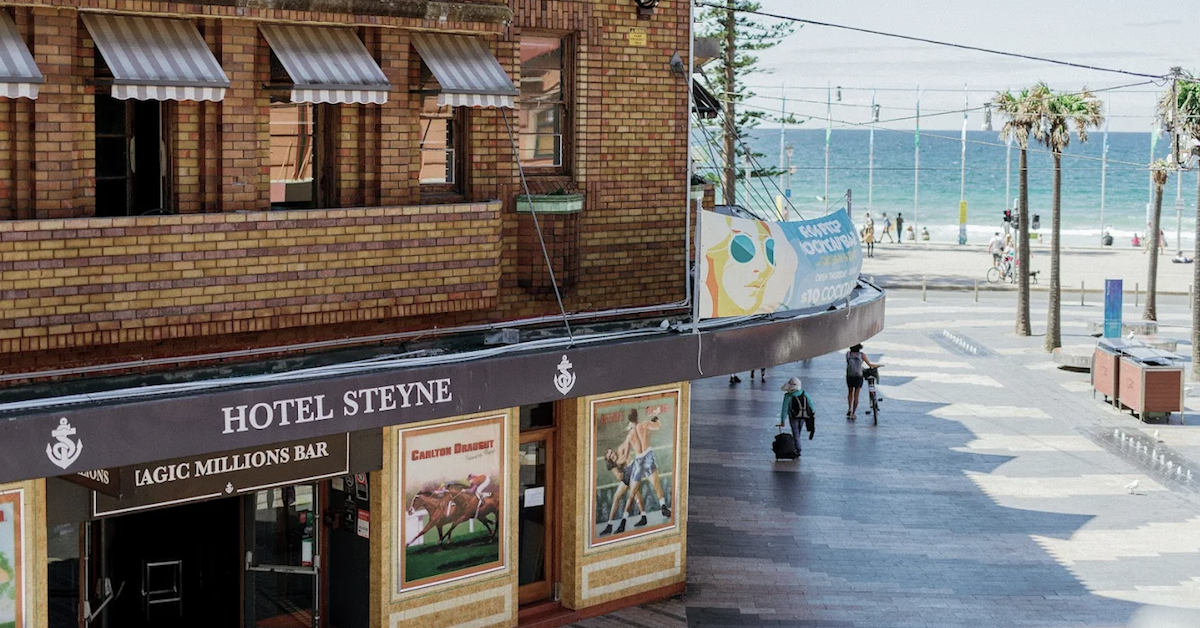



Emergency services were called to the Ivanhoe Hotel on The Corso around 11pm on 25 January after reports of an assault, according to NSW Police.
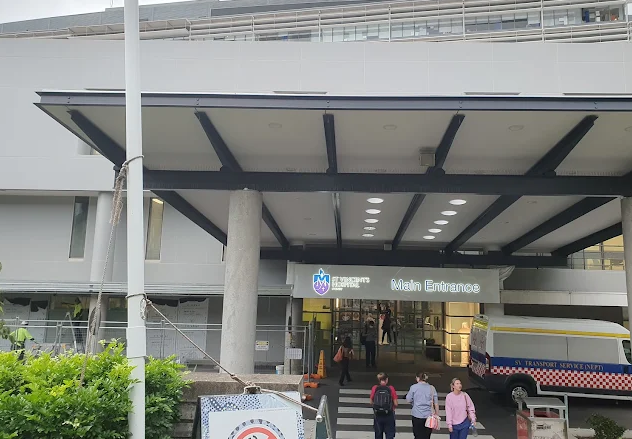
Paramedics treated two local men, aged 44 and 49, at the scene before transporting them to hospital with head injuries. Both men are reportedly in stable condition.
Police say the incident began as a verbal disagreement between the two victims and a younger man who was unknown to them. The younger man was accompanied by two women at the time.
According to authorities, the altercation escalated when the man allegedly struck the 44-year-old victim with a beer glass to the face and hit the 49-year-old multiple times in the head with a bar stool before leaving the premises.
The trio was last spotted walking along North Steyne, between Queenscliff and Manly Beach.
Detectives from Northern Beaches Police Area Command have released images of a man they believe may be able to assist with their enquiries. He is described as appearing to be in his late 30s to early 40s, with a solid build, short dark hair, a moustache, and tribal tattoos on both arms. At the time of the incident, he was wearing a white collared polo shirt with glasses secured in the neckline, shorts, and sneakers.
Anyone who can identify the man, witnessed the incident, or was in the area at the time with dashcam or mobile phone footage is urged to contact Manly Detectives or Crime Stoppers on 1800 333 000.
Retailers across Australia watch shark repellents fly off shelves this summer, even as questions linger over their real-world performance for swimmers at beaches like Manly.
Demand surges nationwide for wearable devices such as magnetic bands and electric field emitters, with surf shops near Manly Wharf struggling to restock amid holiday crowds flocking to the sand.
Local beachgoers snap up wrist and ankle models before dawn patrols or family dips off North Steyne, seeking that extra edge in northern Sydney’s popular surf zone. Stores like Aloha Surf at 44 Pittwater Road report sales doubling as word spreads through community chats about recent shark sightings nearby.
Manly Retailers Hit Hard
Shops along The Corso and around Manly Beach stock popular brands like Sharkbanz and Shark OFF Rio series, designed for surfers and swimmers tackling daily waves. Aloha Surf Manly leads the rush with its core surf focus, where regulars grab deterrents for paddle sessions past the heads.
Families add them to kids’ gear for safe play in the shallows near Little Manly Cove, turning routine beach trips into proactive safety routines. This rush echoes patterns from past hot seasons but accelerates with online buzz and in-store displays emptying fast.
Device Technology Basics
Magnetic repellents overload shark electroreceptors with strong fields, while electric versions utilize battery-powered electrodes to emit a powerful field that overstimulates a shark’s sensory organs, causing them to turn away.
Manly users favor lightweight bands that strap on easily for body boarding or ocean swims toward Fairy Bower. They activate on contact with water, providing hours of coverage per charge for full beach outings at high-traffic spots.
Scientific trials confirm that high-end electric models, like the Ocean Guardian Freedom+ Surf, cut the chances of a shark taking bait from 96 percent to 40 percent. However, researchers warn that cheaper magnetic bands, while popular, showed little to no measurable effect in the same tests.
Effectiveness drops against great whites or in groups, highlighting why locals pair them with patrols. No device offers total protection, but the sales boom shows beach communities value the tested reductions anyway.
National Retail Trend
From Sydney’s northern beaches to Queensland spots, outlets like Rip Curl and online sellers see similar sell-outs of Ocean Guardian and Sharkbanz units. Rebate programs in some states boost access, letting more residents try before buying.
This widespread grab reflects summer caution as drone and net programs expand coverage across New South Wales.
Tips for Manly Beach Users
Visit Aloha Surf on Pittwater Road to compare options; while $50 magnetic bands are the top sellers for their convenience, experts recommend the more expensive electric rechargeables for those seeking scientifically-tested deterrence.
Check battery life and fit for ankles during SUP outings off North Steyne. Apps link to local shark spotters for combined use.
The central retail arcade at Manly Wharfis poised for a comprehensive transformation that could reshape how commuters and visitors experience one of Sydney’s most iconic ferry terminals.
A $4.49 million development proposal currently on exhibition aims to convert the heritage-listed arcade into a unified food and beverage precinct, complete with a new skylight, weather protection, and restored heritage features. The plans represent the most significant upgrade to the retail thoroughfare in recent memory, promising to turn what’s often been a mere passageway into a genuine destination.
Photo credit: Northern Beaches – DA2025/1845
Brisbane-based Artemus Group, which acquired the wharf’s long-term leasehold for $80 million in 2023, has submitted the development application to local officials, with the public exhibition period running from 14 January through 11 February 2026.
What’s Changing?
The proposal involves consolidating the existing seven tenancies down to six, and three kiosks into two, reorganising the entire arcade into four distinct retail zones. According to the Statement of Environmental Effects, every tenancy will operate as a food and drink premises, with a deliberate focus on fresh food and artisanal produce.
Trading hours would extend from 6am to 1am, seven days a week, creating an all-day dining and gathering space at one of the harbour’s busiest transport hubs.
Photo credit: Northern Beaches – DA2025/1845
The physical transformation includes several notable features designed to improve both aesthetics and functionality. A new skylight will be installed above the arcade, allowing natural light to penetrate the space throughout the day. Glass sliding doors will be added at the entrance to provide weather protection during Sydney’s unpredictable conditions, whilst existing shopfronts, partitions and internal elements will be removed to create a more open, cohesive environment.
Lighting and signage will receive comprehensive upgrades, and the development includes plans for fixed seating and improved waiting areas for ferry passengers seeking shelter between services. The flexibility built into the tenancy arrangements means operators could combine two spaces if desired, allowing for larger venues or more diverse offerings.
Heritage Restoration at the Heart
Photo credit: Northern Beaches – DA2025/1845
Perhaps most significant for those concerned about preserving Manly’s character, the development specifically commits to restoring and reinstating heritage-significant features. The Statement of Environmental Effects emphasises that the proposed works will improve public amenity, provide additional shelter and areas of respite for ferry passengers, and restore heritage elements.
This isn’t Artemus Group’s first project at Manly Wharf. Since acquiring the property in 2023, the company has been transforming the precinct. The group purchased the former Manly Wharf Bar for $30 million and reopened it as Felons, part of its broader vision for the site.
Community Input Critical
The public exhibition period represents a crucial window for residents and stakeholders to weigh in on the proposal. Feedback can be submitted through the Northern Beaches planning portal, with the development application reference DA2025/1845.
For a precinct that serves as both a vital transport hub and a gateway to one of Sydney’s most beloved beaches, the arcade’s transformation could have far-reaching implications. The question facing the Manly community is whether converting the entire retail offering to food and beverage premises, with extended trading hours until 1am, aligns with local expectations for the space.
Artemus Group has positioned the development as part of its ongoing commitment to improving Manly Wharf for all users – commuters rushing to catch ferries, tourists exploring the area, and locals seeking harbourside dining options. The company envisions creating a destination that honours the wharf’s heritage whilst meeting contemporary demands.
Whether this vision resonates with the community will become clearer as feedback rolls in during the exhibition period. With the wharf serving as Manly’s gateway, getting this transformation right matters not just for daily commuters, but for the suburb’s identity and economic vitality.
A 27-year-old musician and surfer remains in critical condition at Royal North Shore Hospital following a devastating shark attack at North Steyne Beach in Manly on Monday evening.
Andre de Ruyter, who had travelled from Wollongong for a day of surfing, was attacked around 6:20pm and suffered severe lower leg injuries that resulted in cardiac arrest. He was pulled from the water by fellow surfers and received emergency treatment on the beach before being rushed to hospital, where surgeons were forced to amputate his lower right leg overnight.
Andre De Ruyter Photo Credit: Instagram / @san_andreas_2o
The attack has been attributed to a bull shark, based on a 15-centimetre bite mark found on Mr de Ruyter’s surfboard, according to shark biologists from the primary industries department.
Mr de Ruyter’s survival has been credited to an extraordinary chain of fortunate circumstances and rapid emergency response. Surf lifesavers were conducting CPR and first aid training at the North Steyne Surf Club when the attack occurred, allowing them to respond immediately with a defibrillator and tourniquet.
NSW Ambulance acting-Superintendent Christie Marks described the coordinated rescue effort, which included members of the public who helped keep Mr de Ruyter afloat and assisted with the tourniquet application. An off-duty NSW Ambulance doctor who happened to be swimming at the beach also provided crucial medical assistance.
In an unprecedented move, NSW Highway Patrol officers met the ambulance at Spit Bridge to deliver 13 additional units of blood in what Ms Marks characterised as an “F1 pit stop”, ensuring Mr de Ruyter received urgent transfusions during transport.
The Manly incident was the third shark attack in New South Wales within 24 hours. On Monday morning, an 11-year-old boy was attacked at Dee Why Point, whilst on Sunday afternoon a 12-year-old boy was bitten near Shark Beach at Vaucluse whilst swimming outside a netted area. A fourth attack occurred on Tuesday at Point Plomer on the Mid North Coast, where a 39-year-old man required hospitalisation.
All attacks have been attributed to bull sharks, a species known for inhabiting shallow coastal waters, estuaries and even freshwater rivers.
Northern Beaches Council lifeguards evacuated Manly Beach immediately following Monday’s attack and closed all northern beaches. Surf Life Saving NSW deployed drones, whilst the Westpac Rescue Helicopter and lifesavers on jet skis conducted water patrols. Beach closures remained in effect on Tuesday as authorities continued monitoring the area.
The cluster of attacks has prompted heightened safety protocols across NSW beaches and renewed focus on public awareness regarding shark activity in coastal waters.
Andre de Ruyter, from Wollongong, was surfing at the popular beach around 6:20pm when he was attacked by what authorities believe was a shark. He suffered severe leg injuries and went into cardiac arrest by the time paramedics arrived.
Andre de Ruyter Photo Credit: Facebook / Andre de Ruyter
Fellow surfers pulled Mr de Ruyter from the water and provided immediate assistance on the sand. In a stroke of extraordinary fortune, surf lifesavers were conducting CPR and first aid training at the nearby North Steyne Surf Club when the attack occurred, allowing them to respond within moments with a defibrillator and medical equipment.
An off-duty NSW Ambulance doctor who happened to be swimming at the beach also rushed to assist, providing critical medical care alongside the surf lifesavers and members of the public who had helped bring Mr de Ruyter to shore.
Surf Life Saving NSW chief executive Steven Pearce confirmed that lifesavers applied a tourniquet to Mr de Ruyter’s injured leg and commenced CPR at the scene.
NSW Ambulance acting-Superintendent Christie Marks praised the coordinated response effort, highlighting an unusual measure taken during transport to Royal North Shore Hospital. Two NSW Highway Patrol vehicles met the ambulance at Spit Bridge to deliver 13 additional units of blood in what Ms Marks described as an “F1 pit stop” manoeuvre, necessary due to the significant blood loss Mr de Ruyter had suffered.
Northern Beaches Council lifeguards immediately evacuated all swimmers from Manly Beach and closed beaches along the northern beaches following the attack. Surf Life Saving NSW deployed drones, while the Westpac Rescue Helicopter and lifesavers on jet skis searched for the shark.
The attack at Manly was the third shark incident in Sydney waters within 24 hours. On Sunday afternoon, a 12-year-old boy was bitten by a shark near Shark Beach at Vaucluse and remains in intensive care at Sydney Children’s Hospital with serious leg injuries. Earlier on Monday morning, an 11-year-old boy’s surfboard was bitten by a shark at Dee Why Point, though the boy escaped physical injury.
Surf Life Saving NSW president Steve Pearce described the incident as “bad”, reflecting growing concern among lifesavers following the string of shark encounters across Sydney beaches.
Authorities have urged the public to swim between the red and yellow flags, avoid dawn and dusk swimming when sharks are more active, and follow all beach closures and safety warnings.
A rare pygmy killer whale became stranded alive at Manly Beach, drawing an urgent response from wildlife rescuers and the local community. Sadly, the animal did not survive.
The stranding occurred on Sunday 18 January 2026, when reports of a live marine animal on the sand were received at about 1 p.m. (AEDT). Members of the public and the Manly Surf Life Saving Club contacted the ORRCA rescue hotline after noticing the animal on the shoreline.
Specially trained ORRCA rescue coordinators gathered information and mobilised a response team. By the time rescuers arrived, several re-float attempts had already been made by bystanders. Despite these efforts, the animal died.
The animal was initially described as a dolphin and later identified as a melon-headed whale. Further assessment confirmed it was a pygmy killer whale, a small oceanic toothed whale rarely seen close to shore.
Pygmy killer whales typically grow to just over two metres in length and are most commonly found in deep tropical and subtropical waters. Sightings near beaches are uncommon, and limited information is available about their behaviour due to their offshore habitat and infrequent surface activity.
Post-Incident Examination Planned
Following the incident, the animal was transported by NSW National Parks & Wildlife Service to Taronga Wildlife Hospital. A necropsy will be carried out in the coming days and weeks to determine the cause of the stranding and death.
The examination is expected to help improve understanding of this individual animal and contribute to broader knowledge about the species and marine environment.
Photo Credit: Whale and Dolphin Conservation
Community Response And Public Guidance
ORRCA acknowledged the efforts of the Manly community, noting the strong public concern shown during the incident. Wildlife responders reiterated that while public care is valued, stranded marine mammals require professional assessment, and returning an animal to the water is not always appropriate.
Members of the public are advised to avoid attempting rescues without expert guidance and to contact trained responders immediately if a whale, dolphin or seal is found in distress.
The MV Collaroy, one of Sydney’s most recognisable ferries on the beloved Circular Quay to Manly route, is set to be scrapped after Transport for NSW opened tenders for the vessel’s disposal.
The Freshwater-class ferry, which retired from passenger service in September 2023, has reached what Transport for NSW describes as “the end of its economic life” as a public transport vessel. According to tender documentation on its procurement website, scrapping has been identified as “the only viable method of disposal.”
The tender, which closes on 16 March 2026, seeks “ship recycling yards or contractors experienced in ferry decommissioning and vessel disposal” with the capacity to dismantle a passenger ferry and manage the lawful disposal of vessel materials.
A Ferry Built for the Ocean
Collaroy under construction at Carrington Slipways (Photo credit: CC BY 4.0/Graeme Andrews/Wikimedia Commons)
The MV Collaroy was the final Freshwater-class ferry to enter service in 1988 and was named after Collaroy Beach. Unlike her sister vessels, she was uniquely equipped with underwater stabilisers, enhanced radar for ocean cruises, and thicker hull plating.
This special design earned Collaroy the honour of carrying the Olympic Flame across Sydney Harbour during the 2000 Summer Olympics. However, her service wasn’t without incident—in February 2001, the ferry ran aground on Manly Point, requiring $2 million in repairs and several months out of service.
Collaroy aground near Kilburn Towers in Manly, 2001 (Photo credit: CC BY 4.0/Robert Fildes/Wikimedia Commons)
The Collaroy was originally meant to continue operating alongside her sister vessel Freshwater on weekends and public holidays. However, in June 2022, it was announced that she would be retired due to difficulty obtaining parts for her unique systems.
The Last RiverCat
Meanwhile, the phasing out of Sydney’s RiverCat fleet is nearly complete. The MV Dawn Fraser remains the last operational RiverCat. Six of her sister ships have already been scrapped at Yamba by Polaris Marine Group. The seven RiverCat catamarans, all named after famous Australian female athletes, entered service between 1992 and 1995 on the Parramatta River route.
The RiverCats are being replaced by seven new Parramatta River-class ferries. According to Transport for NSW, the new vessels use 40 per cent less diesel and are future-proofed for conversion to electric propulsion. Six of the new vessels are already in service.
End of an Era
For many Northern Beaches residents who have commuted to the city or enjoyed leisurely harbour crossings aboard the Collaroy, the news represents the closing of a cherished chapter. The ferry’s distinctive profile and ocean-going capabilities made her a standout in Sydney’s fleet for more than three decades.
The scrapping of both the Collaroy and the remaining RiverCats marks a significant shift in Sydney’s ferry operations. While the new vessels promise improved environmental performance and modern amenities, the retirement of these iconic ferries signals the end of an era for Sydney Harbour and the Parramatta River.
As tender bids for the Collaroy’s disposal are evaluated in the coming months, maritime enthusiasts and regular commuters alike may feel a pang of nostalgia for the ferry that once carried the Olympic flame and countless passengers across one of the world’s most beautiful harbours.
A longer season of shark detection drone patrols is underway across the Northern Beaches, with expanded surveillance and safety initiatives in place for summer.
Drone-based shark monitoring has operated along the NSW coastline for almost a decade, with patrols traditionally concentrated during peak summer periods. Following a fatal shark attack at Dee Why Beach in September 2025, the timing and duration of surveillance activities were reviewed.
The revised approach extends aerial monitoring across the summer months, increasing coverage during periods of higher beach activity across the Northern Beaches.
Photo Credit: Surf Life Saving NSW/Facebook
Earlier Patrols And Extended Coverage
Surf Life Saving NSW drone patrols commenced a week earlier than usual on Saturday, 13 December 2025. Surveillance expanded to 50 beaches by 20 December, with drones operating daily throughout the Christmas and January holiday period.
From February, patrols continue on weekends until Sunday, 29 March 2026. Beaches across the Northern Beaches, including Manly, fall within the broader surveillance network operating under the extended schedule.
Monitoring Beyond Standard Patrol Hours
Additional drones and training are being rolled out to boardrider clubs through Surfing NSW. This allows for increased monitoring during unpatrolled times and at organised surf events.
The additional coverage is designed to complement existing lifesaving patrols and improve overall situational awareness at busy coastal locations.
Photo Credit: Surf Life Saving NSW/Facebook
Emergency Response Improvements
Community Shark Bite Kits are being installed at unpatrolled beaches and on emergency response beacons in high-risk coastal locations. The kits contain tourniquets, compression bandages, dressings and other essential first aid supplies intended to support immediate response to serious bite injuries.
Further measures include updates to the SharkSmart app and expanded community education initiatives, including pop-up safety sessions delivered at coastal locations.
Surf lifesaving organisations report that drone surveillance provides earlier detection and improved warning capability for beach users. While the risk of shark interactions cannot be eliminated, extended patrols and enhanced response tools are expected to strengthen beach safety outcomes for Manly over the summer period.
What was once a severely injured green sea turtle has finally returned to her home waters off the Fairy Bower Beach near Manly, after surviving a complex medical battle that required almost a year of intensive care from local wildlife experts at the Taronga Wildlife Hospital.
The turtle, known affectionately by locals as Brownie, was in a critical state when divers found her off Shelly Beach in January. She was struggling to swim and had become trapped in more than a metre of fishing line, with several hooks stuck in her body. Rescuers immediately took her to Taronga Wildlife Hospital, where the veterinary team discovered the extent of her injuries.
The situation was dire for the marine animal. Veterinary staff had to remove the embedded hooks and help her pass 1.67 metres of fishing line through her system. A specialist scan later showed she had developed a bone infection in her front left flipper, likely caused by one of the hooks. This infection meant Brownie needed a long course of antibiotics and pain relief to have any chance of survival.
Brownie’s treatment became one of the longest cases in the history of Taronga Wildlife Hospital. Veterinarian Gabi Tobias noted that releasing a vulnerable species back into the wild is a unique feeling and highlighted the teamwork required to save the animal. After eight months of medical attention, Brownie moved to SEA LIFE Sydney for the next stage of her journey.
At the new facility, she spent four months building up her swimming and diving strength. Staff monitored her progress closely with X-rays and blood tests to ensure she was ready for the ocean. On December 18, a NSW Police Boat carried the rehabilitated turtle offshore near Fairy Bower Beach. The team released her back into the area she is known to inhabit, marking the end of her 11-month recovery.
While Brownie’s story ended well, wildlife carers are worried about recent trends in the area. In the weeks leading up to Brownie’s release, the hospital admitted two more turtles with serious injuries from fishing gear. One of them is a critically endangered loggerhead turtle weighing over 110 kilograms. Both animals are now undergoing surgery and treatment.
Experts are urging people to be more careful when fishing to protect local marine life. The veterinary team advised anglers to keep all fishing lines, hooks, and bait covered and to take all rubbish home with them. They also stressed that if someone accidentally hooks or sees an injured animal, they should not cut the line but instead call a wildlife rescue group immediately, as this action could save the animal’s life.
A new Mexican garden bar and taqueria has opened in Manly, with The Boathouse Group launching Las Palmas on the former Manly Waterworks site along West Esplanade.
Las Palmas opened to the public on Boxing Day, 26 December, as a summer pop-up, offering an early preview ahead of a broader launch planned for January. Doors opened from midday, with finishing works continuing as the venue moves toward completion in late January.
Management described the opening as a low-key opportunity for locals to experience the space during the festive period.
Photo Credit: Las Palmas/Instagram
From Waterslides to Dining
Las Palmas occupies the site of the former Manly Waterworks waterslide park on Manly Cove, adjacent to Manly Pavilion at the end of West Esplanade. The location has been redeveloped into an outdoor hospitality venue following the demolition of the water park.
The opening introduces a new food and drink offering to a site long recognised by locals for its recreational past.
Photo Credit: Las Palmas/Instagram
Coastal Mexican Menu and Drinks
The menu focuses on Mexican coastal flavours inspired by regions including Baja and Oaxaca. Dishes available include raw tuna and swordfish tostadas, beer-battered fish tacos, beef short rib barbacoa tacos and quesadillas, nachos, grilled seafood, churros and buñuelo ice-cream sandwiches.
The drinks menu includes margaritas, tequila, mezcal, cocktails, beer, wine and non-alcoholic options.
The outdoor venue features palm trees, cacti in planter pots, large umbrellas and a timber archway entry with perimeter fencing. Open-air DJs are scheduled to play during afternoons and evenings.
Las Palmas operates from 11 a.m. to midnight, seven days a week, as outlined in development documentation associated with the site.
Local Response and What’s Next
Initial social media responses have been positive, with comments expressing anticipation and interest in visiting over the summer period. Walk-ins have also been discussed for New Year’s Eve.